
How a run works
One run designs three libraries per task, then every implementer solves every problem with each of them.
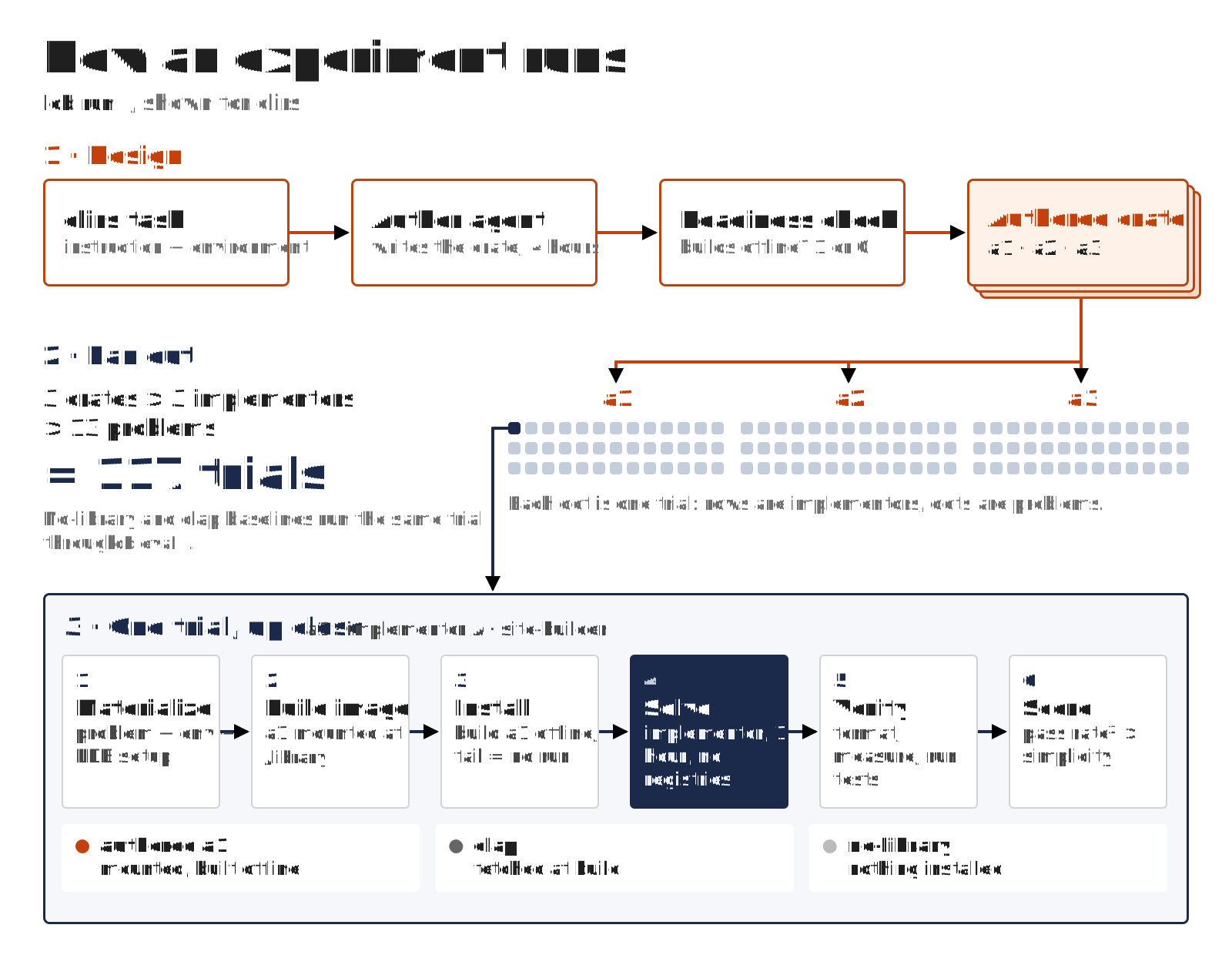
- 1
Build the image
environment/Dockerfile is built once per task and shared by both phases.
- Pre-installed
- Agent tools, the language toolchain, and the task's pinned dependencies, fetched ahead so everything works offline.
- Left out
- The production library and anything like it. Only the production-library arm adds it, on top of this image.
- 2
Design
The model under test writes a library from the open spec. Three libraries per model per task.
- Sees
design/instruction.mdand an empty/workspace- Hidden
- The problems, their tests, and the production library
- Limits
- 4 hours · network to the model API only
- Gate
- The package must install offline, or the library is rejected
- 3
Install the library
Before each implementer starts, in a fresh container.
- /library
- The designer's /workspace, mounted read-only
- /workspace
- The problem's starter project, with the library installed as a dependency
- If it fails
- The solution scores 0
- 4
Implement
Three fixed implementers solve every problem with the library, one container each.
- Sees
- The problem's
instruction.md, the starter project, and the library source - Told
- The library is installed, and the solution is judged on how little code sits on top of it
- Hidden
- Tests, reference solutions, other problems
- Limits
- 1 hour · package registries blocked
- 5
Grade
After the implementer exits, the tests are copied in.
- Format
- The pinned formatter (ruff, rustfmt, fourmolu, prettier) normalizes the code
- Measure
- tree-sitter counts lines and complexity of the implementer's code only
- Test
- Behavioral tests run the program; pass rate = passed / total
- 6
Score
pass rate² × simplicity, then averaged up to the library and the model.
Implementers: DeepSeek V4.1 Flash (mini-SWE), GLM 5.3 Flash (mini-SWE), GPT-5.6 Luna (Codex).
Library conditions
Every arm runs in the same image. Only /library and the project's dependencies differ.
| Arm | /library | Installed into the project |
|---|---|---|
| Designed library | The designer's package, read-only | Yes, before the agent starts |
| No library | Empty | Nothing |
| Production library | Source of the pinned release | Yes, at image build (e.g. clap 4.6.1) |
Before every no-library and designed-library solution starts, a check fails the run if the task's production library is importable.